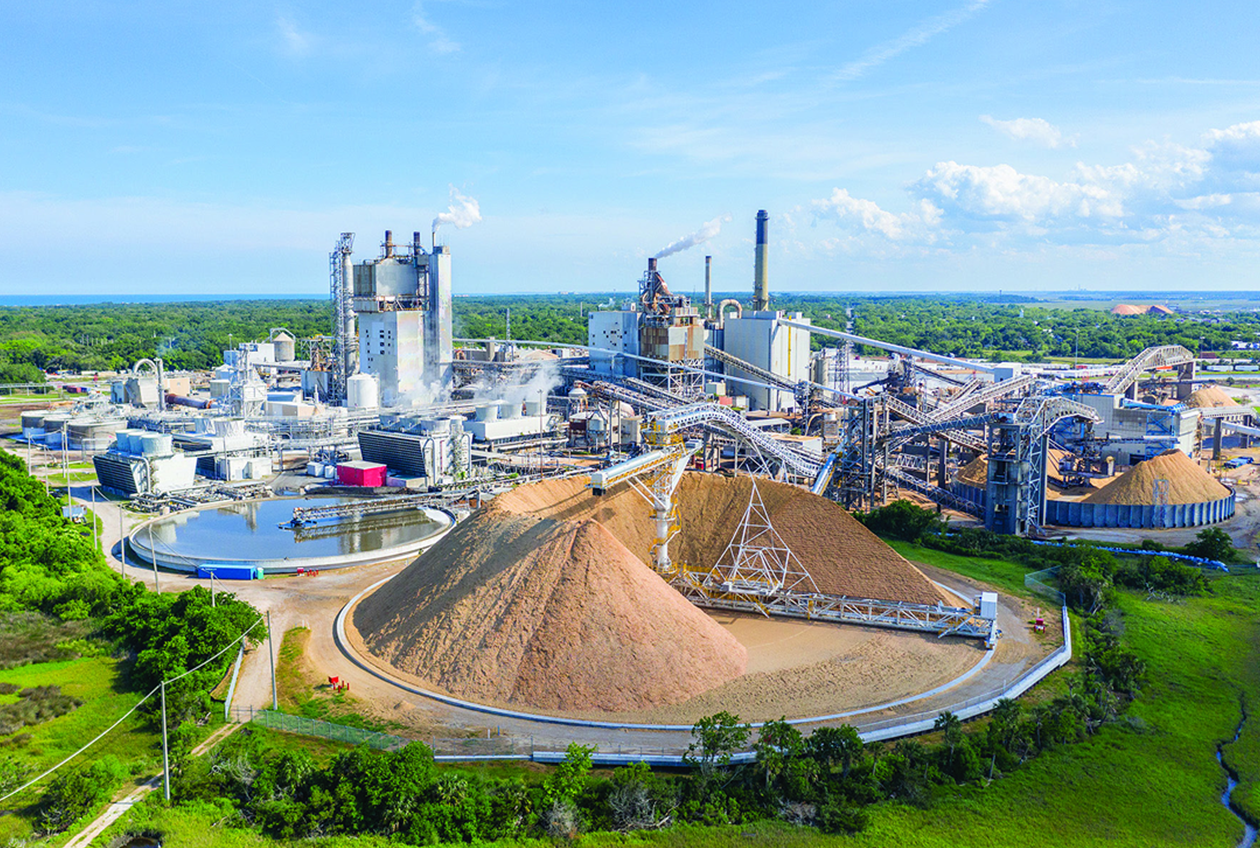
What happens when a pulp and paper producer wants to capture hundreds of thousands of tonnes of biogenic CO₂ annually but doesn’t have excess steam capacity? A recent Svante project explored exactly that challenge and uncovered a pathway that could help mills decarbonize without major disruption to existing operations.
Why Recovery Boilers are Central to Pulp and Paper Decarbonization
As the pulp and paper industry looks for ways to reduce emissions and generate high-quality carbon removal opportunities, recovery boilers are attracting increasing attention. These assets often produce concentrated biogenic CO₂ streams, making them promising candidates for carbon capture and storage (CCS).
However, many mills face a common challenge: carbon capture systems typically require a lot of energy, particularly for steam production. Adding new steam generation equipment can increase energy requirements, drive up capital costs, create integration challenges, and complicate project economics.
This raises an important question that many operators are now asking:
Can a pulp mill capture significant volumes of biogenic CO₂ without installing new steam generation assets?
An Engineering Study for a Large Kraft Pulp Mill
In a recent anonymized Svante engineering study, a large kraft pulp and paper facility evaluated opportunities to capture CO₂ from its recovery boiler flue gas generated from black liquor combustion. The facility’s objective was straightforward:
- Capture a meaningful volume of biogenic CO₂
- Minimize impacts to mill operations
- Avoid major new utility infrastructure wherever possible
- Create a pathway toward future carbon dioxide removal (CDR) credits and long-term decarbonization goals
The project required a detailed assessment of flue gas characteristics, site integration opportunities, energy requirements, and carbon capture plant design considerations.
The Critical Role of Waste Heat
One of the most significant findings from the study was the value of existing waste heat resources already available at the mill.
Rather than assuming new boiler capacity would be required, the engineering team evaluated opportunities to recover and reuse low-grade waste heat from existing operations. The resulting concept integrated heat recovery with mechanical vapor recompression (MVR) technologies to support carbon capture operations.
For facilities pursuing carbon capture, this highlights an often-overlooked opportunity: The best source of energy for carbon capture may already exist within the plant boundary.
Designing Carbon Capture Around Mill Realities
Every industrial facility has unique operating constraints. For pulp and paper mills, successful carbon capture projects must be designed around existing equipment, maintenance schedules, utility systems, and production requirements.
The study examined:
- Recovery boiler flue gas composition
- Carbon capture process integration
- CO₂ purification and compression requirements
- Heat recovery opportunities
- Site-specific utility constraints
- Project development pathways from early feasibility through execution planning
Beyond process design, the project also evaluated commercial considerations including project development milestones, carbon removal opportunities, transportation and storage pathways, and long-term deployment planning.
Why Solid Sorbent Carbon Capture Is Gaining Attention
Many pulp and paper producers evaluating carbon capture are looking for technologies that can integrate effectively with complex industrial operations.
In this study, the capture concept leveraged Svante’s VeloxoTherm™ carbon capture technology, which employs structured solid sorbent filters and rotary adsorption contactor equipment instead of traditional liquid solvents or amines. The technology is designed to work with low-temperature heat sources and industrial flue gas streams.
Key attributes evaluated during the project included:
- Operation using low-grade heat sources
- Electrification-ready configurations
- Modularity for staged deployment
- Compatibility with recovery boiler flue gas
- Reduced operational complexity compared with solvent-based systems
What the Study Revealed
While every mill is different, the engineering assessment demonstrated that substantial biogenic CO₂ capture may be achievable through thoughtful integration of Svante’s solid sorbent carbon capture technology, waste heat recovery, and site-specific design.
The resulting concept advanced beyond a simple technology screening exercise and established a pathway that could potentially move toward front-end engineering and design (FEED) activities.
Perhaps most importantly, the project demonstrated that carbon capture evaluations should consider the entire system, including:
- Flue gas characteristics
- Utility integration
- Waste heat recovery
- Compression requirements
- Carbon removal or CDR value creation
- Transportation and storage considerations
- Future project execution planning
The Real Question for Pulp Producers
Many pulp and paper mills are asking whether carbon capture is technically feasible.
The better question may be: What would a carbon capture system look like at my facility?
The answer depends on factors such as flue gas composition, available heat sources, utility constraints, site layout, and business objectives. That’s why detailed engineering studies are one of the first steps to take for producers evaluating carbon capture and carbon dioxide removal opportunities.
Download the Full Case Study
This article only scratches the surface. The complete case study includes:
- Detailed flue gas characteristics
- Capture system architecture
- Waste heat integration strategy
- Project development roadmap
- Engineering assumptions
- Commercial considerations
- Quantified performance outcomes and project metrics